Category: Uncategorized

  • Are Smart Irrigation Controllers Worth the Investment for Homeowners?

    Are Smart Irrigation Controllers Worth the Investment for Homeowners?

    Maintaining a healthy lawn and landscape depends on weather conditions, soil composition, plant varieties, and seasonal changes. For homeowners looking to improve efficiency and simplify lawn care, smart irrigation technology offers a practical alternative to traditional watering schedules. Just as timely sprinkler system repair can help keep an irrigation system operating properly, upgrading to a smart controller can improve how and when water is distributed throughout a property. With features such as automated scheduling, remote adjustments, and weather-based controls, these devices may help homeowners conserve water, reduce unnecessary expenses, and maintain healthier outdoor spaces.

    What Is a Smart Irrigation Controller?

    A smart irrigation controller manages an outdoor watering system using programmed schedules and, depending on the model, information about local weather, soil moisture, and other environmental conditions. Unlike conventional timers that run according to fixed schedules, smart controllers can adjust watering based on changing circumstances.

    Traditional controllers typically operate at predetermined times and intervals. While this approach can work for straightforward landscapes, it does not always account for rainfall, temperature fluctuations, or changing plant requirements. A schedule that makes sense during a hot, dry stretch may waste water when cooler temperatures arrive or several days of rain leave the soil saturated.

    Smart controllers provide greater flexibility by allowing homeowners to create customized schedules and, with compatible equipment, automatically modify them as conditions change. Some models connect to local weather data, while others can work with soil moisture sensors or flow-monitoring devices.

    For homeowners considering irrigation system upgrade services, understanding these features can help determine whether the technology fits their property and budget.

    Automated Scheduling Makes Lawn Care Easier

    One of the biggest advantages of a smart irrigation controller is the ability to automate watering schedules around the needs of the landscape.

    Homeowners can generally program different watering times and durations for individual irrigation zones. This is useful because a lawn, flower bed, vegetable garden, and shaded planting area may have different moisture requirements. A single schedule applied uniformly across the entire property can leave some plants too wet while others receive insufficient water.

    Automated scheduling allows homeowners to establish a routine that reflects these differences. Once the system is configured, it can run without requiring daily adjustments.

    Many smart controllers also support seasonal schedule changes. As temperatures rise during summer or fall in cooler weather, watering requirements change. A controller with seasonal adjustment features can help homeowners modify irrigation without repeatedly rebuilding the entire schedule.

    Automation is especially helpful for people with busy work schedules, frequent travel, or large properties with multiple watering zones. Instead of remembering to turn the system on and off, homeowners can rely on programmed settings while periodically checking that the system continues to perform as expected.

    However, automation does not eliminate the need for maintenance. Incorrectly positioned sprinkler heads, damaged components, clogged nozzles, and poorly configured zones can still lead to uneven coverage. A smart controller can improve scheduling, but the irrigation equipment itself must also be functioning properly.

    Remote Adjustments Offer Greater Control

    Another useful feature is the ability to manage watering from a smartphone or other connected device. Depending on the model, homeowners can review schedules, start or stop watering cycles, and make adjustments without visiting the controller itself.

    This convenience can be valuable when weather changes unexpectedly or plans shift. For example, someone preparing to leave town can check the system remotely rather than relying on a neighbor to manage watering. A homeowner who notices that a particular garden bed is drying out may also be able to adjust the relevant zone, provided the system is configured to support that change.

    Remote access can be particularly useful for larger properties where irrigation controllers are installed in garages, utility rooms, or other locations that are not convenient to reach.

    Some systems provide alerts or notifications when a watering cycle starts, stops, or encounters a potential issue. More advanced equipment may also identify unusual water flow, which can help homeowners investigate possible leaks or malfunctioning components.

    The available features vary considerably between models. Some controllers offer straightforward app-based scheduling, while others provide detailed water-use information, sensor integration, and more advanced monitoring tools.

    Before purchasing a system, homeowners should consider which capabilities they will actually use. A simple connected controller may be sufficient for a small residential lawn, while a property with extensive landscaping may benefit from more sophisticated controls.
    Weather-Based Controls Can Reduce Unnecessary Watering

    Weather-based adjustments are among the most compelling reasons to consider a smart irrigation controller. Rather than following a rigid schedule regardless of conditions, compatible systems can use weather information to determine when watering should be reduced, delayed, or skipped.

    For example, a controller connected to a weather service may postpone irrigation when rainfall is expected or adjust watering durations during cooler periods. Some systems calculate estimated landscape water requirements using information such as temperature, rainfall, sunlight, humidity, and wind.

    Other systems use soil moisture sensors to measure conditions closer to the plants themselves. When the soil already contains sufficient moisture, the controller may delay a scheduled cycle, depending on the system’s configuration.

    These features can help prevent a common problem with conventional timers: watering simply because the schedule says it is time, even when the landscape does not need additional moisture.

    The U.S. Environmental Protection Agency provides information about water-efficient irrigation and related technologies through its WaterSense program. Its guidance emphasizes the importance of using water appropriately outdoors and choosing irrigation equipment that supports efficient water use.

    Homeowners should keep in mind that weather-based controls are not infallible. Forecasts can change, sensors require proper placement and maintenance, and watering recommendations must account for local soil and plant conditions. A controller also needs accurate initial settings to produce useful adjustments.

    Can Smart Controllers Help Homeowners Save Water?

    Potential water savings are a major consideration when deciding whether a smart irrigation controller is worth the investment.

    Traditional irrigation schedules can waste water when they fail to account for rainfall, seasonal changes, or differences between landscape zones. Smart controls can help address these problems by adjusting watering to better match actual conditions.

    In fact, automatic irrigation system approximately 7,600 gallons of water annually. The estimate is based on EPA’s comparisons involving more efficient irrigation controller technology, and actual results depend on the property, local climate, existing watering practices, and system configuration.

    Water savings can translate into lower utility bills for households that pay for metered water, although the financial benefit depends on local rates and how much water the existing system uses. In some areas, reducing outdoor water demand may also help conserve a limited local resource during dry periods.

    Smart controllers are most likely to provide meaningful benefits when they correct an inefficient schedule or prevent unnecessary watering. A homeowner who already uses a well-designed schedule and adjusts it carefully throughout the year may see a smaller improvement than someone whose existing timer runs regardless of weather.

    It is also important to avoid assuming that a smart controller automatically makes every irrigation system efficient. Leaks, excessive water pressure, poor sprinkler placement, and unsuitable watering durations can still waste water. Combining smart technology with proper system maintenance provides a more complete approach to conservation.

    Are Smart Irrigation Controllers Expensive?

    The cost of a smart irrigation controller varies according to the number of zones it supports, its connectivity options, sensor compatibility, and the complexity of the installation. Smart controllers work best as part of a well-maintained irrigation system, so homeowners should also consider how routine inspections and preventive maintenance can help keep their watering equipment operating efficiently over time.

    A basic connected controller may require only a relatively straightforward replacement, while a more advanced system could involve additional sensors, wiring changes, or other equipment. Professional installation may add to the initial cost but can help ensure the controller is configured correctly and communicates with the existing irrigation system.

    Homeowners should also check whether the controller requires a subscription for advanced features, whether it depends on a stable Wi-Fi connection, and whether it is compatible with the existing valves and irrigation equipment.

    To determine whether the investment makes financial sense, compare the purchase and installation costs with potential savings over several years. Consider water bills, the frequency of manual adjustments, and the value of having better control over the landscape.

    There is no universal payback period. A large property with substantial outdoor water use may benefit more than a small yard with limited irrigation needs. Local water prices, rainfall patterns, and the efficiency of the existing system all influence the outcome.

    Even when direct financial savings are modest, some homeowners may value the convenience, flexibility, and ability to monitor watering remotely.
    What Should Homeowners Consider Before Upgrading?

    Before purchasing a smart controller, evaluate the existing irrigation system and the specific needs of the property.

    Start by determining how many watering zones the controller must operate. Confirm that the replacement supports the existing system and any additional zones planned for future landscaping projects.

    Next, consider the property’s environmental conditions. A landscape with sunny lawns, shaded garden beds, steep slopes, and different soil types may benefit from more detailed scheduling than a relatively uniform yard. Rain sensors, soil moisture sensors, and weather-based adjustments may provide additional value when they address conditions that a basic timer cannot manage effectively.

    Connectivity is another consideration. Some controllers rely on Wi-Fi to access weather data and remote controls. Homeowners should verify that the installation location has a dependable connection and understand what happens if connectivity is temporarily lost.

    Finally, evaluate the condition of the irrigation equipment. Before investing in new technology, make sure the existing system is suitable for continued use. A controller cannot compensate for broken sprinkler heads, leaking pipes, or poorly designed coverage.

    An irrigation professional can help determine whether a controller upgrade is appropriate, identify equipment problems, and recommend features based on the property’s layout and watering requirements.

    The Verdict: Is a Smart Irrigation Controller Worth It?

    Yes, a smart irrigation controller is a worthwhile investment because it offers more flexible scheduling, convenient remote access, and the ability to respond to changing weather conditions. These features can simplify lawn care and reduce unnecessary watering when the system is configured correctly.

    The greatest benefits are likely to come from matching the technology to the property’s actual needs rather than purchasing the most advanced controller available. Homeowners with extensive landscaping, high outdoor water use, or schedules that make manual adjustments difficult may find the technology especially useful.

    Smart controls are not a substitute for sound irrigation practices or routine maintenance, but they can make an already functional system more responsive and efficient. By comparing the initial cost, available features, potential water savings, and compatibility with existing equipment, homeowners can decide whether an upgrade makes sense for their property and long-term landscape goals.
  • How Preventive Maintenance Extends the Life of Your Landscape Watering System

    How Preventive Maintenance Extends the Life of Your Landscape Watering System

    A well-designed watering system is one of the best investments a property owner can make for maintaining healthy turf, attractive landscaping, and efficient water use. Installing a irrigation sprinkler system provides consistent, automatic watering while reducing the guesswork that often leads to overwatering or dry spots. However, like any mechanical system, they require regular attention to continue performing at their best. Preventive maintenance helps identify minor issues before they become expensive repairs, extends the lifespan of system components, and ensures your landscape continues receiving the right amount of water throughout the growing season.

    Why Preventive Maintenance Matters

    Many homeowners and property managers assume that if water is coming out of the sprinkler heads, everything is working properly. In reality, hidden problems often develop gradually. A leaking valve, clogged nozzle, or damaged underground pipe may not immediately cause a noticeable issue, but over time these small problems can affect water pressure, increase utility costs, and place unnecessary strain on the entire system.

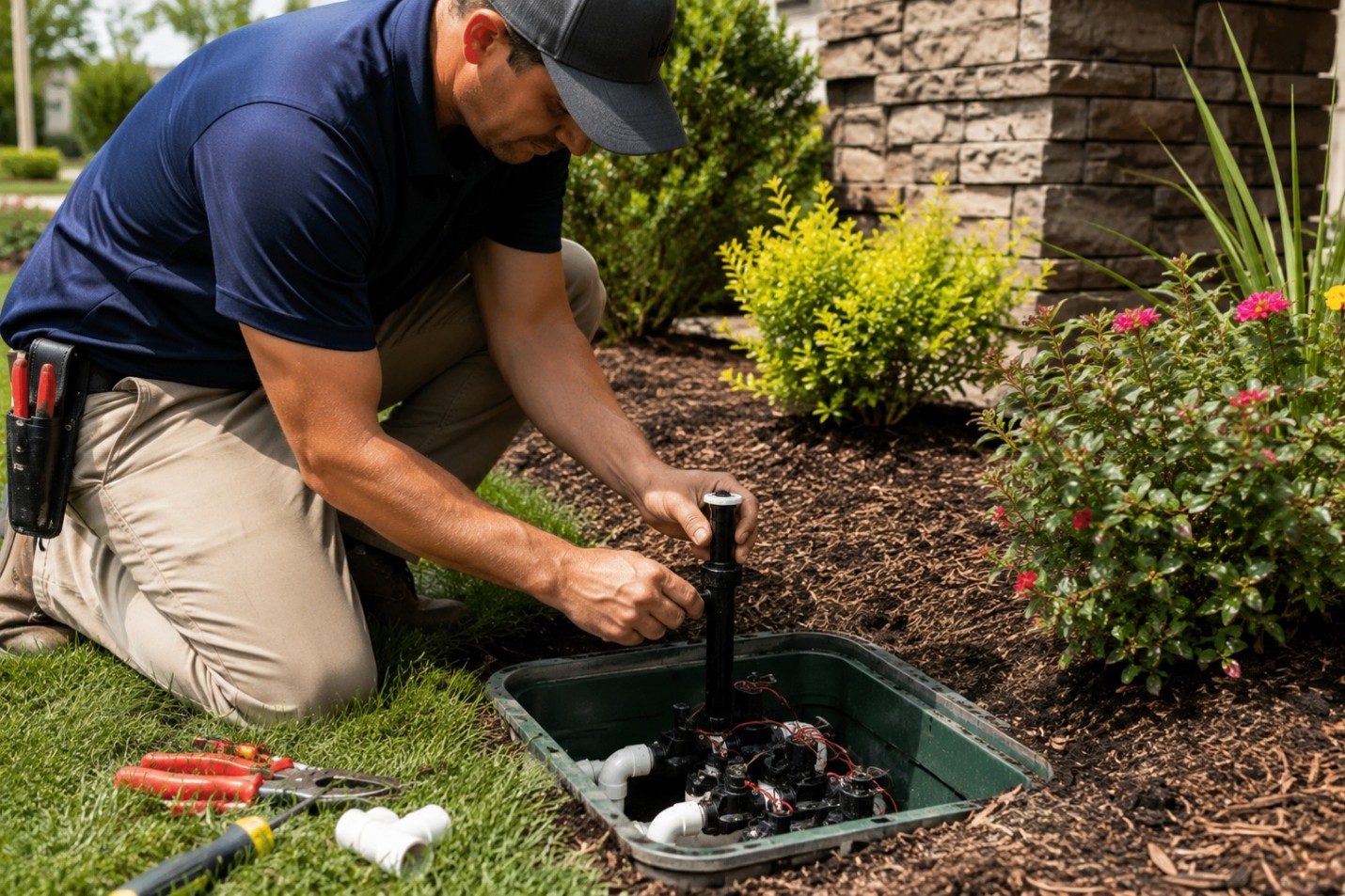
    Routine maintenance allows technicians to catch these issues early. Replacing a worn seal or adjusting a misaligned sprinkler head is significantly less expensive than repairing extensive water damage or replacing major system components after years of neglect.

    Preventive maintenance also helps ensure that every part of the system operates as intended, promoting healthier lawns and landscapes while conserving water.

    Protecting Valuable Components

    A watering system consists of numerous interconnected components, each playing a specific role in delivering water efficiently. These include valves, controllers, wiring, pipes, sprinkler heads, sensors, and backflow prevention devices.

    When one component begins to fail, it often affects others throughout the system. For example, a leaking valve may force the pump to work harder, while clogged nozzles can increase pressure elsewhere in the system. Over time, these added stresses accelerate wear and reduce the lifespan of multiple components.

    Routine inspections help keep every part functioning correctly, preventing unnecessary strain and extending the service life of the entire system.

    Small Problems Rarely Stay Small

    One of the greatest benefits of preventive maintenance is identifying problems before they escalate. Even relatively minor issues can significantly reduce efficiency over time. According to the U.S. Environmental Protection Agency, a household with an automatic landscape irrigation system that isn’t properly maintained and operated can waste up to 25,000 gallons of water each year, underscoring the importance of routine inspections and timely repairs.

    Common issues include:

    • Sprinkler heads that have shifted due to mowing equipment or foot traffic
    • Leaking fittings beneath the surface
    • Cracked sprinkler heads
    • Clogged nozzles
    • Worn seals
    • Controller programming errors
    • Broken sensors
    • Minor pipe damage caused by tree roots or ground movement

    While each issue may seem relatively minor on its own, they often lead to larger problems if left unresolved. A small underground leak will not only waste thousands of gallons of water, but can slowly erode soil around foundations or hardscapes.

    Addressing these concerns early helps avoid emergency repairs, reduces unnecessary water consumption, and protects surrounding landscaping.

    Improving Water Efficiency

    Water conservation has become increasingly important for both residential and commercial property owners. In fact, outdoor water use accounts for more than 30% of the average household’s total water consumption, and as much as 50% of that water can be lost due to inefficient irrigation methods and systems. Even a properly designed system can become less efficient over time without regular adjustments.

    Sprinkler heads may become blocked by grass growth or landscape mulch. Plants mature and alter watering patterns. Soil conditions change. Seasonal weather varies from year to year.

    Preventive maintenance allows watering schedules, spray patterns, and coverage zones to be adjusted based on current landscape conditions rather than relying on outdated settings. These routine adjustments help reduce water waste while promoting healthier lawns and landscapes throughout the growing season.

    These adjustments often result in:

    • Reduced water waste
    • Lower utility bills
    • Improved turf health
    • More consistent landscape appearance
    • Better compliance with local watering restrictions

    A properly maintained system delivers water where it is needed instead of allowing overspray onto sidewalks, driveways, or streets.

    Maintaining Proper Water Pressure

    Water pressure plays a critical role in system performance.

    Pressure that is too high can create excessive misting, causing much of the water to evaporate before reaching the soil. High pressure also increases wear on sprinkler heads, fittings, and valves.

    Pressure that is too low can prevent sprinkler heads from fully extending or create uneven coverage that leaves portions of the landscape dry.

    Routine maintenance includes checking pressure throughout various watering zones to ensure consistent operation. When pressure problems are identified early, technicians can often correct them before they begin damaging equipment.

    Seasonal Maintenance Makes a Difference

    Changing seasons place different demands on lawn watering systems.

    Spring

    As temperatures rise, a watering system should be carefully inspected before regular operation begins. A comprehensive spring startup should include inspecting sprinkler heads for damage or misalignment, checking valves for leaks, testing water pressure, programming seasonal watering schedules, examining wiring connections, verifying that sensors are functioning properly, and identifying any damage caused by freezing winter temperatures.

    Beginning the season with a thorough inspection helps ensure the system operates efficiently from the start, reduces water waste, and minimizes the risk of unexpected breakdowns during the busiest watering months.

    Mid-Season Adjustments

    As summer progresses, landscapes change significantly.

    Grass becomes thicker, shrubs grow larger, and trees produce denser foliage. These changes may alter spray patterns or block portions of the watering area.

    Mid-season inspections allow technicians to make adjustments that improve coverage while preventing wasted water.

    Fall Winterization

    In regions where freezing temperatures occur, winterization is one of the most important maintenance services.

    Removing water from pipes, valves, and sprinkler heads prevents freezing damage that can crack components and require costly repairs the following spring.

    Proper winterization significantly extends the lifespan of underground piping and mechanical components.

    Protecting Your Investment

    Landscaping is a significant financial investment.

    Trees, shrubs, flower beds, sod, and decorative plantings all depend on consistent watering. Even short periods of inadequate irrigation during hot weather can stress plants and require costly replacement.

    Preventive maintenance helps ensure every planting area receives appropriate water coverage throughout the growing season.

    Healthy landscapes also contribute to:

    • Higher property values
    • Improved curb appeal
    • Reduced soil erosion
    • Better root development
    • Stronger resistance to drought stress

    Maintaining the watering system ultimately helps protect the landscape it supports.

    Smart Technology Requires Maintenance Too

    Today’s systems now incorporate smart controllers, weather monitoring, rain sensors, soil moisture sensors, and remote management capabilities.

    Although these technologies automate many watering decisions, they still require periodic inspection and calibration.

    Rain sensors may become obstructed by debris. Software settings may need updating. Communication issues between controllers and connected devices can occasionally develop.

    Preventive maintenance ensures these advanced features continue functioning properly, allowing property owners to benefit from improved efficiency and water conservation.

    Commercial Properties Benefit Even More

    For commercial properties, preventive maintenance is often even more valuable.

    Office parks, homeowner associations, municipalities, schools, athletic facilities, golf courses, and retail centers rely on attractive landscaping to create positive impressions while protecting substantial investments.

    Unexpected system failures can affect large portions of a property, resulting in brown turf, unhealthy plantings, or excessive water waste that becomes highly visible to visitors.

    Routine maintenance programs help commercial property managers:

    • Minimize emergency repairs
    • Extend equipment life
    • Reduce operating expenses
    • Improve landscape appearance
    • Maintain consistent watering performance
    • Simplify budgeting for future repairs

    Scheduled inspections also help identify aging components before they fail during periods of peak demand.

    Saving Money Over the Long Term

    Some property owners postpone maintenance because everything appears to be working normally. However, deferred maintenance often leads to much higher repair costs over time. Preventive service helps keep expenses under control by identifying small issues before they become major problems, preventing extensive water damage, lowering monthly water bills through improved efficiency, reducing the need for emergency service calls, extending the lifespan of system components, and helping property owners avoid the cost of premature system replacement. In most cases, the cost of routine inspections and minor repairs is far less than replacing underground piping, valves, controllers, or large sections of damaged landscaping after a preventable failure.

    Working With Experienced Professionals

    Professional maintenance goes beyond simply replacing broken sprinkler heads.

    Experienced technicians evaluate the entire system, looking at how individual components work together. They assess water distribution, controller settings, pressure levels, drainage conditions, and overall system performance.

    Because they regularly work with a wide range of residential and commercial properties, professionals can often identify developing problems long before they become noticeable to property owners.

    Their recommendations help prioritize repairs, improve efficiency, and maximize the long-term value of the system.

    A Long-Term Investment in Performance

    A lawn watering system is designed to provide years of dependable service, but longevity depends on consistent care. Preventive maintenance keeps components operating efficiently, minimizes unexpected breakdowns, and helps protect both the landscape and the investment beneath it.

    Whether maintaining a residential lawn, commercial campus, athletic complex, or community landscape, routine inspections and timely repairs provide lasting benefits. By addressing minor issues early, adjusting the system as landscapes evolve, and preparing equipment for seasonal changes, property owners can enjoy healthier landscapes, lower operating costs, and reliable performance for many years to come.

  • Lawn Sprinkler System | Why Should I Install One?

    Lawn Sprinkler System | Why Should I Install One?

    April 9, 2024


    Why should I install a lawn sprinkler system?

    Frequently, when we meet potential customers (or when we are just hanging out with our friends) we get the same question: Should I install a Lawn Sprinkler System at my home? If your lawn looks great, or maybe if it is small enough for you to handle on your own, you may not want to. But, there are certainly many benefits. It’s a personal choice.

    Things to Consider when deciding if a Lawn Sprinkler is right for you:

    1. Size of your lawn: If you have a large lawn, a sprinkler system can help you to ensure even watering without the need for manual effort. For smaller lawns, handheld or oscillating sprinklers might suffice.
    2. Watering needs: Consider the watering needs of your lawn and plants. Some grass types and plants require more water than others. A sprinkler system can be programmed to deliver the right amount of water at the right time, optimizing water usage.
    3. Time and effort: If you’re willing to manually water your lawn regularly, you might not need a sprinkler system. However, if you prefer a hands-off approach, a sprinkler system can save you time and effort.
    4. Budget: Sprinkler systems can range from simple, affordable options to more sophisticated, expensive systems. Consider your budget.
    5. Climate: Even in New Jersey with consistent rainfall, a sprinkler system can provide additional watering during dry spells.
    6. Maintenance: Sprinkler systems require maintenance, such as occasional repairs and adjustments. RR Irrigation can handle this for you, since most homeowners prefer not to DIY.

    See the benefits for your home or business:

    1. Convenience: One of the primary benefits is the convenience of automated watering. With a sprinkler system, you can set timers to water your lawn at specific times, ensuring consistent watering without the need for manual effort.
    2. Efficiency: Sprinkler systems can be programmed to deliver the right amount of water to your lawn, reducing water waste compared to manual watering methods. This can result in lower water bills and better conservation of this valuable resource.
    3. Even coverage: Sprinkler systems are designed to provide even coverage across your lawn, ensuring that every area receives the necessary amount of water. This helps promote healthy grass growth and minimizes the risk of dry patches or overwatering.
    4. Time-saving: By automating the watering process, you save time that would otherwise be spent manually watering your lawn. This gives you more time to focus on other tasks or activities.
    5. Customization: Sprinkler systems come in various types and configurations, allowing you to customize them to suit the specific needs of your lawn. Whether you have a small garden or a large lawn with multiple zones, there are sprinkler systems available to meet your requirements, and RR Irrigation has solutions for every application and work with the best manufacturing brands in the business.
    6. Increased property value: A well-maintained lawn can enhance the curb appeal of your home and increase its resale value. A properly installed and maintained sprinkler system demonstrates that you care for your lawn, which can be attractive to potential buyers if you decide to sell your home in the future.

    Need help? We’re ready to provide a free estimate when you are—and we offer free estimates! RR Irrigation is a proud, family-owned business that’s been serving Central NJ for over 50 years. Owners Paul and Steve are hands-on and take the time to get to know each customer personally. When you choose us, you’re not just hiring a service—you’re joining a community that values quality, trust, and long-term relationships. Ready to get started? Schedule your appointment today and see the difference for yourself:

  • Lawn Sprinkler Turn On | It’s Almost Time for Spring!

    Lawn Sprinkler Turn On | It’s Almost Time for Spring!

    March 22, 2024


    RR IRRIGATION


    It’s almost time for lawn sprinkler turn ons

    Just when the clocks Spring ahead, RR Irrigation knows it is almost time to spring into action. Not that we were not busy during the Winter. What were we doing, you wonder? Getting ready for the next season! In addition to working on designs and plans for the Spring Irrigation Season Installations, we do work in the Winter to make sure all of our equipment is working properly and we spend a great deal of time just prepping. But here we are again, and we are ready to service your lawn sprinkler for Spring.

    RR Irrigation Middlesex NJ

    Time for Spring Watering?

    1. Frost Dates: We wait until after the last frost date in our area– Middlesex, NJ–to avoid damage to your sprinkler system from freezing temperatures. Frost dates vary in New Jersey, so we keep a careful eye on local resources for accurate information and we pay attention to what is going on right here in Somerset, Morris, Hunterdon and the surrounding counties in Central New Jersey.
    2. Soil Temperature: Grass roots start to grow when soil temperatures consistently reach about 55°F (about 13°C). This is a good indicator that it’s time to start watering. We measure soil temperature with a soil thermometer or check local agricultural extension services for soil temperature updates.
    3. Weather Conditions: If we are experiencing a particularly dry early spring, we may need to start watering your lawn sooner to prevent stress. Conversely, if spring brings plenty of rain, delaying the start of regular watering might make more sense. It’s New Jersey weather…so who knows!
    4. Lawn Condition: Keep an eye on your lawn. If it starts to show signs of growth and green up, it’s likely needing more water, especially if the weather has been dry. If you haven’t heard from us yet…contact us! Spring is busy, but it is important to us that you are happy. We will do whatever is in our power to get there as soon as we can.

    RR Irrigation can provide advice, including the best time to start water your lawn in the spring based on your conditions and grass. We also look for ways to improve and conserve water when we come out to your home. Just ask us! The team at RR Irrigation looks forward to seeing everyone soon.

    Other ways RR Irrigation can help you with your sprinklers:

    1. System Design and Installation: RR Irrigation can design and install a sprinkler system that’s tailored to the specific needs of your lawn and garden. We consider factors like soil type, sun exposure, and the types of plants you have. A well-designed system ensures efficient water use and coverage.
    2. Maintenance and Repairs: Regular maintenance is crucial for keeping your sprinkler system working efficiently. RR Irrigation performs annual or seasonal check-ups, cleans and adjust sprinkler heads, and repairs or replaces damaged parts. This helps prevent leaks, clogs, and uneven watering.
    3. System Upgrades: If your system is outdated or not performing well, RR Irrigation can recommend and install upgrades. This might include more efficient sprinkler heads or smart controllers that adjust watering based on weather conditions. Some areas require drip irrigation systems.
    4. Water Efficiency Audits: RR Irrigation can conduct water efficiency audits to ensure your sprinkler system is using water as efficiently as possible. This may involve adjusting the watering schedule, reducing runoff, and ensuring that water is directed where it’s needed most.
    5. Expert Advice: RR Irrigation can provide valuable advice on watering schedules, drought-tolerant plant options, and how to achieve a healthy lawn with minimal water use. 
    6. Troubleshooting and Problem Solving: If you encounter issues with your sprinkler system, such as uneven coverage, high water bills, or poor plant health, RR Irrigation can diagnose the problem and provide solutions.

    By leveraging the expertise of a professional irrigation company, you can save time and reduce water waste, all while keeping your lawn and garden in top condition. This not only contributes to the aesthetic appeal and value of your property but also promotes sustainability by conserving water. Contact us to learn more. Here are some frequently asked questions.

  • Who’s Who Connect | Spring 2020 Edition

    Who’s Who Connect | Spring 2020 Edition

    April 29, 2020


    RR IRRIGATION


    Who’s Who Connect – Check Us Out!

    Inside the spring 2020 edition of Who’s Who Connect, you can see our story and read about the future of your irrigation systems. Stay connected with us this springtime with The Blue Book Building and Construction Network! Click here for the full article.

    Who's Who Connect Spring Edition 2020 about RR Irrigation

    In our edition of Who’s Who Connect, you can read all about our exciting story! RR Irrigation is a proud, family-owned business that’s been serving Central NJ for over 50 years. Owners Paul and Steve are hands-on and take the time to get to know each customer personally. Headquartered in Middlesex, New Jersey, the company installs and maintains irrigation, outdoor lighting and drainage systems for commercial customers across Northern Philadelphia, Eastern Pennsylvania, Central and Northern New Jersey, New York City and Southern New York state. Additionally, the company provides residential services to customers within a 25-mile radius and larger residential customers and estates as far away as Bucks County, Pennsylvania.

    Need help? We’re ready to provide a free estimate when you are—and we offer free estimates! When you choose us, you’re not just hiring a service—you’re joining a community that values quality, trust, and long-term relationships. Ready to get started? Schedule your appointment today and see the difference for yourself:

  • Smart Irrigation Month | Promote Efficient Water Use

    Smart Irrigation Month | Promote Efficient Water Use

    April 28, 2020


    RR IRRIGATION


    Smart Irrigation Month

    Smart Irrigation Month is a public awareness campaign to promote efficient water use.

    July is smart irrigation month

    Focused on July, traditionally the month of peak demand for outdoor water use, the campaign highlights simple practices and innovative technologies to:

    1. Make maintaining green spaces easy and convenient.
    2. Minimize overwatering while keeping lawns, gardens and landscapes beautiful and healthy.
    3. Save money on utility bills.
    4. Help protect community water supplies for today and the future.
    5. Property owners and managers typically overwater, unintentionally wasting money every time they take out the hose or turn on the sprinklers. RR Irrigation, a leader in smart water-saving practices, is delivering real results by:
    6. Helping customers plant and maintain low water landscapes that will thrive in their climate and site conditions.
    7. Installing new irrigation systems that use real-time weather data and soil moisture sensors to automatically adjust watering to meet plant needs.
    8. Using low volume microirrigation to precisely apply very small amounts of water to gardens, trees and shrubs, minimizing evaporation and waste.
    9. Retrofitting existing systems with rain sensors that prevent watering in rainy weather.
    10. Helping customers program automatic controllers to comply with community watering restrictions while extracting maximum benefit from every drop of water.
    11. Auditing irrigation systems to make sure water is being using effectively and making necessary adjustments.
    12. Identifying customer rebates from water utilities and other resources for water-efficient products.