
Category: News

  • A Historic Fountain Restoration at NYBG | RR Irrigation

    A Historic Fountain Restoration at NYBG | RR Irrigation

    Preserving a Piece of New York History:
    RR Irrigation at the Fountain of Life
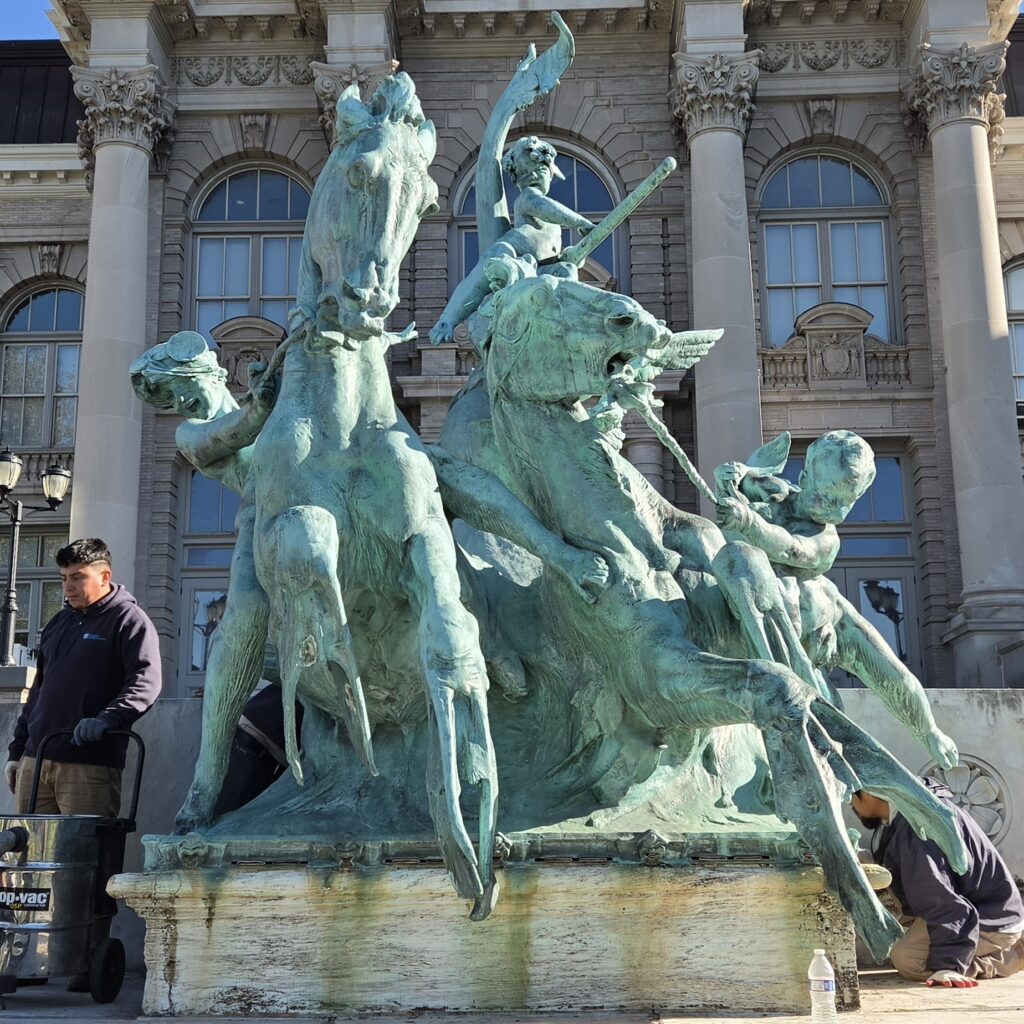
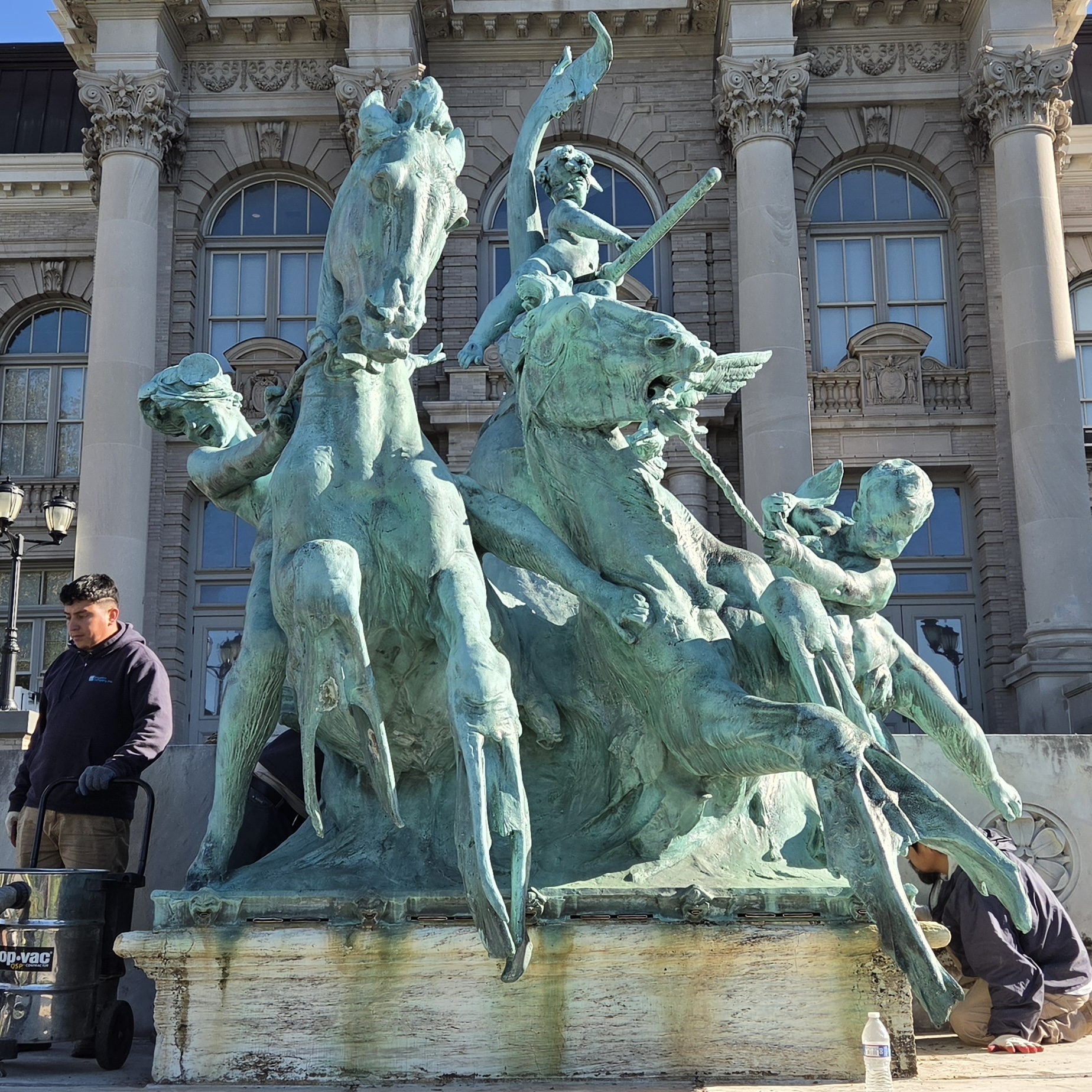
    Fountain Repair at NYBG
    Fountain Repair at NYBG

    Behind the scenes of a historic fountain restoration at the New York Botanical Garden

    Some projects are about more than maintaining a water system. They’re about preserving history, protecting craftsmanship, and ensuring that remarkable landmarks continue to inspire future generations.

    RR Irrigation is proud to be working on one such project: the historic Fountain of Life at the New York Botanical Garden (NYBG) in the Bronx, New York.

    Dating back to 1905, this extraordinary fountain has been a centerpiece of the Garden for more than 120 years. Today, RR Irrigation is helping maintain its beauty and functionality by carefully cleaning its internal components and rebuilding its pumping system.

    It’s a project that brings together history, engineering, and the specialized expertise required to keep a century-old water feature operating.

    A Fountain With More Than a Century of History

    The Fountain of Life is one of the New York Botanical Garden’s most recognizable architectural landmarks. Located directly in front of the historic LuEsther T. Mertz Library Building, the fountain has welcomed generations of visitors with its elaborate bronze sculptures, marble basins, and flowing water.

    Designed by sculptor Charles E. Tefft and installed in 1905, the fountain reflects the grandeur of the Beaux-Arts movement, when public spaces were designed to celebrate art, architecture, and nature.

    Its dramatic sculptures depict mythical figures, including seahorses, a nymph, a mermaid, and a merman, creating a lively scene that symbolizes the struggle and energy of life.

    The fountain was conceived as a focal point of the Garden’s original landscape design, with flowing water serving as an essential part of the artistic experience.

    More than a decorative feature, it is a lasting example of early 20th-century public art and craftsmanship.

    The Engineering Behind the Beauty

    Visitors see the sculptural details and graceful movement of water. What they don’t see is the complex mechanical system that makes it all possible.

    Behind every functioning fountain is a carefully coordinated network of pumps, piping, circulation equipment, and internal components that work together to move water through the structure.

    These systems are essential to maintaining the fountain’s intended appearance and operation.

    Over time, even well-maintained water features require specialized attention. Mineral deposits, accumulated debris, natural wear, and aging mechanical components can affect water circulation and pumping efficiency.

    For historic fountains, the challenge becomes even more significant.

    Unlike modern installations, older structures may present unique mechanical configurations, access limitations, and preservation considerations. Any work must balance contemporary performance requirements with respect for the original design.

    That’s where specialized water-system expertise becomes particularly valuable.

    RR Irrigation’s Work at the Fountain of Life

    RR Irrigation’s current work at the Fountain of Life focuses on two important areas: cleaning the fountain’s internal components and rebuilding its pumping system.

    Although much of this work happens out of public view, it is essential to the fountain’s continued operation.

    Cleaning the internal components helps remove accumulated material that can interfere with water movement and mechanical performance. Careful attention to these areas supports proper circulation and helps reduce unnecessary strain on equipment.

    Rebuilding the pumping system addresses another critical element of the fountain’s operation.

    Pumps are responsible for circulating water throughout the fountain, creating the movement that brings the sculpture to life. Their performance directly influences the fountain’s water flow and overall visual effect.

    A properly functioning pumping system is also important for long-term reliability and efficient operation.

    For the RR Irrigation team, this work requires an understanding of how water systems function, along with the care and attention appropriate for a historic landmark.

    The objective is straightforward but important: help ensure that this extraordinary fountain can continue operating as intended while respecting its historical significance.

    Why Historic Fountain Maintenance Matters

    Historic fountains occupy a unique place in public landscapes.

    They combine architecture, sculpture, mechanical engineering, and water into a single experience. Unlike a static monument, a fountain depends on functioning equipment to fully express its original design.

    When the water stops flowing, something important is lost.

    The movement, sound, and energy that the artist envisioned are all part of the fountain’s identity.

    Regular maintenance and thoughtful mechanical improvements help protect these features while supporting the longevity of the installation.

    The Fountain of Life has already undergone significant preservation work during its history, including a comprehensive restoration completed in 2005 to celebrate its centennial.

    That restoration addressed the fountain’s sculptures, marble elements, plumbing, and mechanical systems.

    Today, continued attention to its infrastructure remains an important part of caring for this historic treasure.

    RR Irrigation’s involvement reflects the ongoing work necessary to maintain a landmark long after its original construction or major restoration.

    Specialized Expertise Beyond Traditional Irrigation

    While irrigation systems are often associated with lawns, gardens, and commercial landscapes, the principles of water management extend much further.

    Pumping equipment, water circulation, system performance, and mechanical reliability are equally important in decorative and architectural water features.

    Projects like the Fountain of Life highlight the broader applications of that expertise.

    Working on a historic fountain requires more than simply understanding how to move water. It demands attention to the relationship between mechanical systems and the surrounding structure, as well as an appreciation for the importance of preserving an established landmark.

    Every component plays a role, and even work that remains invisible to visitors can make a meaningful difference.

    For RR Irrigation, the project is an opportunity to apply technical knowledge to something with lasting cultural and historical value.

    Helping Keep History Flowing

    For more than a century, the Fountain of Life has stood as a symbol of artistry, nature, and the enduring beauty of the New York Botanical Garden.

    Its sculptures tell a story, its architecture reflects another era, and its flowing water continues to bring the entire composition together.

    RR Irrigation is honored to contribute to the ongoing care of this remarkable landmark.

    By cleaning its internal components and rebuilding its pumping system, our team is helping support the fountain’s continued operation so that visitors can enjoy its beauty for years to come.

    Because sometimes, the most important work happens behind the scenes—and preserving history means keeping it flowing.

    RR Irrigation provides professional irrigation and water-system expertise, bringing technical knowledge, precision, and careful attention to projects of all sizes.

  • Fall & Winter Lawn Sprinkler Care Tips Every New Jersey Homeowner Should Know

    Fall & Winter Lawn Sprinkler Care Tips Every New Jersey Homeowner Should Know

    The changing of the leaves is a good reminder that your lawn sprinkler needs to be winterized.

    When fall arrives in Central New Jersey, most homeowners assume their lawn sprinkler system can “take a break.” But preparing your irrigation system for colder weather is one of the most important steps you can take to protect your lawn investment and avoid expensive repairs in the spring Fall and winter

    At RR Irrigation, we’ve been helping families and commercial properties manage seasonal sprinkler care, winterization, and water management since 1971—right here in Central NJ. Lawn sprinkler service is critical during the winter months, so if you have not called RR Irrigation, or your Lawn Sprinkler company, do it now before the ground freezes.

    Why Fall Matters for Your Irrigation System

    Even though grass growth slows down, your lawn and landscaping still need proper moisture through the early fall months. Adjusting sprinkler settings, inspecting sprinkler heads, and checking for leaks are essential steps. A quick fall inspection helps:

    • Prevent water loss
    • Guard against pipe damage
    • Improve winter turf health
    • Get your system ready for spring startup

    It’s basically like putting your lawn to bed properly—old-school, but still necessary.

    Winterization: The Most Important Step

    When cold temperatures hit New Jersey, any remaining water inside your irrigation pipes can freeze and expand. That’s when burst pipes and broken valves happen. A professional sprinkler winterization service protects your system by blowing out remaining water, shutting down the backflow, and preparing the system for freezing temperatures.

    RR Irrigation provides winterization throughout Central NJ and Central Jersey, including towns like Bridgewater, Middlesex, Clinton, Flemington, Hillsborough, Basking Ridge, Bernardsville, and Somerville.

    What You Should Do Before Winter

    Here’s a quick seasonal checklist:

    • Schedule winterization (before the first freeze)
    • Shut down your backflow device
    • Lower watering frequency in early fall
    • Keep an eye out for wet spots or pooling water
    • Plan for any spring upgrades now

    Think of this as your irrigation “maintenance season”—just like your HVAC or roof.

    About RR Irrigation

    RR Irrigation has been a trusted name in irrigation design, installation, and service since 1971. Owners Steve Do and Paul Maiwaldt continue a long tradition of reliable service, expert workmanship, and long-term customer relationships. With decades of hands-on irrigation experience, RR Irrigation offers a full range of residential and commercial solutions including:

    • Lawn sprinkler systems
    • Irrigation design & installation
    • Seasonal service & repairs
    • System upgrades
    • Green roof irrigation
    • Equestrian irrigation & dust control
    • Landscape lighting
    • Drainage solutions

    Whether you’re preparing for winter or planning ahead for spring, RR Irrigation provides experienced, local service based on knowledge, integrity, and proven results.

    Book Fall or Winter Service

    If you’re preparing your sprinkler system for colder weather or need support with irrigation maintenance, winterization, or upgrades, our team is ready to help. Contact RR Irrigation in Middlesex, NJ to schedule your fall or winter irrigation service.

    Because a healthy lawn doesn’t happen by accident—it’s planned, season by season.


  • New Jersey-Based RR Irrigation Aids New York Botanical Garden Following Irrigation Emergency System Disruption

    New Jersey-Based RR Irrigation Aids New York Botanical Garden Following Irrigation Emergency System Disruption

    Emergency Irrigation Service: When Water Becomes the Problem, RR Irrigation Is the Solution

    When disaster strikes, water can either be the problem—or the solution. However, you can read on to find out how RR Irrigation responded immediately to provide emergency irrigation service that helped save the New York Botanical Garden.

    This June, the New York Botanical Garden faced a critical irrigation emergency after a 36-inch water main ruptured 15 feet underground. The break, located beneath an overpass in the Bronx, flooded nearby apartments and parking lots. More urgently—it also cut off the garden-wide irrigation supply. Timing was critical.

    A Crisis Below, and a Heatwave Above is an irrigation emergency

    The Garden’s irrigation system typically draws from a 48-inch, 110-year-old low-pressure transmission pipe. This pipe runs parallel to the failed main. Due to the pipes’ close proximity, the New York Department of Environmental Protection (DEP) was forced to shut off both lines during the repair process. This action turned out to be more complicated than expected. What was supposed to be a quick fix, became an irrigation emergency—right as temperatures soared into the triple digits.

    With 110 acres of delicate plant collections at risk, time was of the essence. And, RR Irrigation was there to provide emergency irrigation service.

    RR Irrigation Springs Into Action–Expert problem solving.

    As a trusted leader in New Jersey commercial irrigation services, the Garden called RR Irrigation to provide an emergency Irrigation service solution. Under intense conditions and working closely with NYDEP:

    • Our team removed a 6” fire hydrant
    • Our team built a flange assembly which is a strong, sealed connection point that joins two sections of pipe together. In this case, It allowed us to safely and securely connect our temporary water line to the city’s hydrant system. Think of it as the custom adapter that made the whole emergency irrigation setup possible.
    • We ran 320 feet of pipeline up and over a 10-foot retaining wall to reach the pump station.
    • Our technicians installed custom piping inside the pump house, connecting directly to the intake pipe that feeds the irrigation system.

    This was no small fix. Since the Bronx’s water pressure hovers around 45 psi, a powerful boost was required in this irrigation emergency.

    We deployed a four-pump station system:

    • (4) 40-horsepower booster pumps
    • (1) 7.5-horsepower pressure maintenance pump

    Even with the best efforts, the temporary supply can only support about one-third of the garden’s typical water needs—roughly 1,600 gallons per minute during peak times. To conserve water, the Garden shifted to a rationed watering schedule, including daytime irrigation for some areas. This is temporary.

    Nature Can’t Wait—Neither Do We

    As the main line repair continues, we’ re standing by to ensure the Garden’s living collections are protected.

    Our team proudly helped preserve one of the most iconic botanical spaces in the country—especially under such high-stakes, high-pressure conditions. It was meaningful to us. And personal.

    Whether it’s maintaining large-scale public landscapes like the NYBG or installing smart sprinkler systems in central New Jersey, We deliver the same level of commitment and precision to every project. Here in Central NJ and beyond.

    Looking for reliable, expert irrigation system installation or emergency repair in the New Jersey Tri-State area? Contact RR Irrigation—where expertise meets urgency, and results speak for themselves.

    6-inch irrigation pipe anchored with yellow straps and 30-inch duckbill ground anchors leading to pump house during RR Irrigation sprinkler system repair
    The 6-inch pipe runs along the ground toward the pump house , secured in place with yellow straps and heavy-duty ground anchors.
    6-inch irrigation pipe routed over visitor center retaining wall toward New York Botanical Garden pump station by RR Irrigation
    6-inch piping rises from the hydrant connection, running up and over the visitor center’s retaining wall—the gateway to one of the garden’s most iconic spaces
    Custom flange assembly connected to fire hydrant base for maximum water flow during RR Irrigation emergency project
    Custom pipe connection installed by RR Irrigation at the fire hydrant base after removing the hydrant to allow full water flow
    6-inch temporary irrigation pipe connected to pump supply line, with original supply pipe visible next to SCH 80 elbow, during emergency install by RR Irrigation
    The 6-inch pipe connects to the pump line—old pipe shown on the right
    6-inch irrigation pipe entering pump house through modified vent opening during emergency installation by RR Irrigation
    A 6-inch pipe being fed into the pump house—our team temporarily removed the vent fan to make room for the setup.
    FAQ